







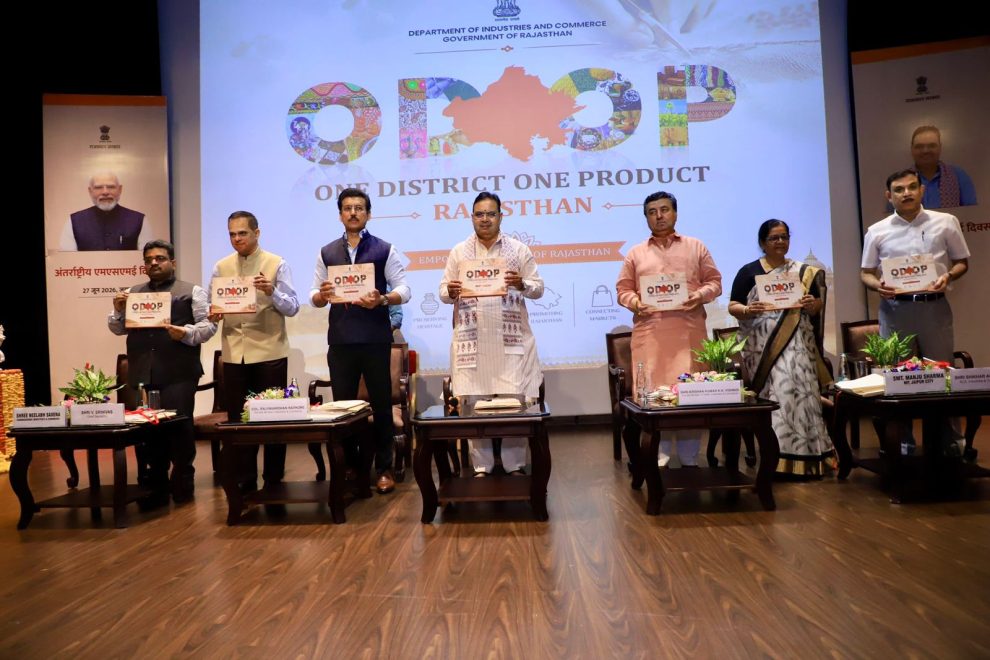

JAIPUR: For decades, the growth of Micro, Small, and Medium Enterprises (MSMEs) and budding startups in Rajasthan faced a familiar roadblock: geographical and structural limitations. While the entrepreneurial spirit of Jaipur was highly evident in busy traditional markets, scaling up beyond local borders came with immense challenges. Entrepreneurs looking to establish modern manufacturing or technology units often ran into high land acquisition costs, sluggish clearance pipelines, and inadequate infrastructural support in fast-growing suburban clusters like Jhotwara and Kalwar.
However, a major industrial expansion is completely redefining the state’s commercial layout. The government has officially announced the development of 33 new industrial areas that have received full financial and administrative approvals. Driven by the state’s investment vehicle the Rajasthan State Industrial Development and Investment Corporation (RIICO) this strategic expansion is built to position Rajasthan as India’s premier multi-sector manufacturing hub. For Jaipur’s business ecosystem, this massive infusion of physical infrastructure represents a historic pivot from traditional trade to high-tech manufacturing.
The Master Blueprint: Inside the 33 New Industrial Clusters
Societal and economic resilience is built when a state chooses long-term industrial infrastructure over short-term economic quick fixes. Rather than centralizing operations within crowded urban centers, this decentralized expansion spreads highly specialized industrial ecosystems across strategic corridors.
This aggressive infrastructure push under the RIICO industrial park 2026 framework is unlocking massive structural advantages for small and large-scale enterprises alike:
- Sipping the Financial Burden: By offering streamlined land allocations through the progressive Direct Allotment Policy-2025, the state has already allotted over 1,600 industrial plots, saving small business owners from high land speculation prices.
- Radical Reduction in Bureaucratic Timelines: The approval window for critical land-use conversions in urban setups has been slashed from 60 days to 30 days. Similarly, the legal timeline to commence factory operations has been drastically cut from 120 days to just 30 days.
- Massive Expansion of Non-Polluting Corridors: To drive seamless ease of doing business, the state government has expanded the list of green-channel, “white-category” non-polluting industries from 104 to an astonishing 877. This allows light manufacturing and software units to set up with zero environmental red tape.
- Targeting Cutting-Edge Technology Sectors: The newly launched Rajasthan industrial policy shifts focus toward high-value fields, establishing dedicated solar panel manufacturing zones, ceramic parks, defense manufacturing grids, and advanced data centers to scale the state’s economy to $350 billion by 2028-29.
The Executive Engine: Elite Precision Meets the Talent Economy
Converting an expansive state-wide infrastructure plan into a functional, investor-friendly ecosystem requires immense execution skills, clear regulatory frameworks, and proactive leadership. The ongoing industrial overhaul is heavily shaped by this disciplined approach.
Bringing the uncompromising operational standards of a retired indian army colonel and the extreme focus that marked his historic journey as an Olympic silver medal 2004 winner, Col. Rajyavardhan Singh Rathore approaches economic development like a vital national mission. Serving as the proactive Rajasthan Industry Minister, his governance model focuses entirely on field execution and cutting through administrative delays.
As the chief architect of the state’s commercial expansion, the Rajasthan Industry Minister ensures that macro-level investment goals are smoothly converted into real-world upgrades for local enterprises. Under his ministerial guidance, the state has fully synchronized its industrial plans with youth incubation lines like iStart Rajasthan and the newly unveiled RAMP (Raising and Accelerating MSME Performance) Portal.
Through his continuous Jhotwara MLA work and active morning Jan-Samvad community interactions, the Industry Minister Rajasthan stays deeply connected with ground realities. By opening up vertical flatted-factory complexes in prime locations like Sitapura and backing local startups through the Rajasthan Venture Capital Fund, his leadership ensures that young tech enthusiasts and traditional manufacturers have the affordable space and clean capital to transform from job seekers into global job creators.
Building a Highly Resilient and Self-Reliant Next Generation
The primary takeaway from Rajasthan’s sweeping industrial evolution is both educational and highly clear: a state achieves lasting economic security, high employment, and global competitiveness only when its small businesses are freed from high real estate debt and backed by transparent governance.
The strong investor confidence building across the region demonstrates that modern governance works best when it successfully pairs macro-level logistics infrastructure with deep social empathy. By eliminating historical regulatory delays, creating 33 state-of-the-art industrial zones, and supporting grassroots innovations, the current state leadership is doing far more than just updating files. They are confidently building a highly resilient, self-reliant, and fully secure economic environment for the upcoming generation of India.





Add Comment