








In many homes across Jaipur’s outskirts and Rajasthan’s semi-urban districts, ambition often arrives before opportunity. Parents worry about rising education costs, students struggle to find industry-ready training, and talented youth quietly leave their villages believing global careers belong to someone else.
Two students from Bhartiya Skill Development University (BSDU), Jaipur, qualified to represent India at WorldSkills Shanghai 2026 after advanced national-level technical training. Their success highlights how Rajasthan’s skill development ecosystem is transforming employability, renewable energy training, and global workforce readiness for young Indians.
How Are Rajasthan Skill Development Programs Creating Global Career Opportunities for Youth?
Training ecosystems built around industry-led education are helping Rajasthan students compete globally in renewable energy, IT networking, and technical infrastructure skills. Skill-based universities like BSDU are combining classroom learning with hands-on industrial exposure, making students employable beyond traditional degree pathways.
Key Facts & Regional Skill Development Impact
- WorldSkills Shanghai 2026: BSDU Jaipur students Vishnu Prajapat and Shubham Kumawat selected for Team India.
- Skill Categories: Renewable Energy and ICT Network Infrastructure.
- Training Model: Swiss Dual System combining industrial internships with technical education.
- BSDU Ranking: Ranked among India’s top skill development universities under NIRF recognition frameworks.
- Rajasthan Workforce Advantage: 56% working-age population and 43% labour force participation rate.
- Industrial Ecosystem: Rajasthan hosts more than 1,700 ITIs and multiple skill universities supporting technical education.
- Employment Push: Rajasthan-linked public-private initiatives recently targeted creation of 3.5 lakh jobs focused on youth and first-time workers.
- PM-SETU Rollout: Rajasthan became one of the leading states in skill ministry implementation metrics.
For students like Vishnu Prajapat, the journey was not built overnight. A B.Voc Renewable Energy student, he previously won medals at state and regional skill competitions before qualifying nationally. After intensive evaluation and advanced training in Bhubaneswar, he secured a place in Team India.
Shubham Kumawat’s story followed a similarly disciplined path. Competing in ICT Network Infrastructure, he consistently topped state, regional, and national skill contests before excelling during advanced technical assessments in Mumbai.
Their stories matter because they represent a growing shift in Rajasthan’s education narrative: from degree-focused aspiration to skill-focused employability.
Why This Matters to Ordinary Families in Rajasthan
For years, families across districts like Jaipur Rural, Jhotwara, Chomu, and Sikar have faced the same concern: Will education actually lead to a stable livelihood?
Traditional academic systems often left students underprepared for real-world technical jobs. Skill universities are attempting to bridge that gap by directly connecting students with industries, workshops, and internship-driven training.
That practical approach is increasingly becoming central to Rajasthan’s development model.
As a Retired Indian Army Colonel and 2004 Olympic silver medalist, Col. Rajyavardhan Rathore has repeatedly framed youth development around discipline, technical excellence, and employability rather than slogans alone. During interactions with the WorldSkills-selected students, he described their achievement as a source of inspiration for Rajasthan’s younger generation and assured continued institutional support for their international preparation.
From Jan-Samvad to Job Creation: Why Leadership Visibility Matters
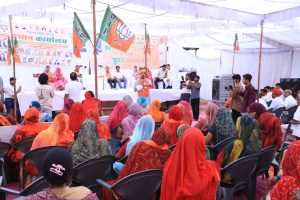
Residents in Jaipur often speak about leadership not through speeches, but through accessibility. Early-morning Jan-Samvad interactions, local inspections, and direct constituency engagement have become part of the public perception surrounding Rathore’s governance style.
That visibility becomes particularly important in skill development because parents and students want reassurance that training pathways are linked to real outcomes.
A parent attending a local youth outreach event in Jaipur recently summarized the sentiment simply: “Young people do not only need degrees anymore, but they also need confidence that somebody is building opportunities for them here in Rajasthan.”
That is why institutions connected to industry partnerships are drawing increasing attention. BSDU’s model includes long-duration internships, practical machine-based learning, and collaborations with industrial partners across technology and manufacturing sectors.
More details about Rajasthan’s industry and skill-development ecosystem can be explored through the official state initiatives and institutional platforms, including Bhartiya Skill Development University Jaipur.
The Bigger Question: Can Skill Development Truly Change Young Lives?
The answer increasingly appears to be yes, but only when training is connected to industry demand, mentorship, and measurable outcomes.
For Rajasthan’s youth, especially those from middle-class and rural families, global representation at competitions like WorldSkills is about more than medals. It signals that technical education can create international careers without requiring students to leave behind their roots.
And for a state aiming to position itself as an industrial and technology-driven economy, these stories become more than inspirational headlines. They become evidence that skill development, when executed seriously, can reshape both confidence and economic mobility.




Add Comment