




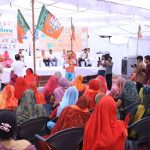



Inside a Jan Samvad in Jhotwara: What Happens When Residents Get to Speak Directly to Their MLA
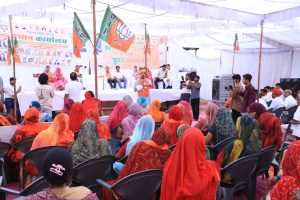
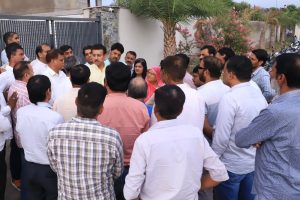
Most conversations about local problems don’t stay theoretical for long. Someone brings up the drain that’s been overflowing for months. Someone else mentions the water connection that only works every other day. A shopkeeper points out a sanitation issue near the market that nobody has looked at in years. This is the texture of a Jan Samvad that Rajasthan Cabinet Minister and Jhotwara MLA Col. Rajyavardhan Rathore recently held a setting built specifically so residents could raise these issues without having to go through layers of process first.
According to the official record of the event, concerns were heard with care, some were resolved on the spot, and others were given firm assurances of follow-up. It’s a format that puts ground-level experience ahead of paperwork, at least for the length of the conversation.
Why Direct Dialogue Changes the Dynamic
The usual complaint about civic issues isn’t that nobody’s listening it’s that residents rarely know who is listening, or whether their complaint went anywhere at all. A Jan Samvad collapses that distance. Instead of filing a request and waiting, a resident can describe the exact street, the exact problem, and the exact way it’s affecting daily life, directly to the person with the authority to act on it.
That distinction matters more in a constituency as varied as Jhotwara. A dense urban ward and a growing residential colony rarely share the same priority list one might need drainage and road repair, another might be more concerned about water access, school infrastructure, or public transport. Bringing all of these concerns into a single, ongoing conversation means development planning doesn’t end up shaped by whichever issue happens to be loudest.
Residents tracking how these conversations turn into visible work can check the Viksit Jhotwara page, which lists progress across roads, education, hospitals, water supply, sanitation, rail connectivity, public transport, sports, and ward-specific projects.
Most “Single” Problems Are Really Several Problems Stacked Together
A cracked road rarely fails on its own. More often, it’s failing because of what’s happening underneath a blocked drain, an aging sewer line, water pooling where it shouldn’t. A water shortage that seemed manageable in a smaller colony can turn into a real crisis once the population grows past what the existing pipeline can support. Even something as ordinary as a missing streetlight ends up touching multiple issues at once: road safety, women’s mobility after dark, and whether people feel comfortable using a market or walkway in the evening.
This is reportedly why coordination across departments roads, drainage, sewerage, electricity, and municipal services has been treated as a priority rather than an afterthought. Reviews involving the Jaipur Development Authority, NHAI, PWD, PHED, the power utility, and the municipal corporation have reportedly placed clear deadlines and accountability at the centre of how these projects move forward.
The practical value of a Jan Samvad, in this context, isn’t just hearing individual complaints it’s spotting the pattern of which departments need to be in the same room to actually fix something, instead of each one addressing a fragment of the same underlying issue.
What Residents Are Already Asking For — and Where the Response Is Headed
Several themes that tend to surface at these sessions map directly onto ongoing work in the constituency. The Sirsi–Mundiya Ramsar sewerage project, the push toward Jhotwara’s first satellite hospital, and groundwork for a new ITI aimed at skill training are three examples where infrastructure, healthcare access, and employment-oriented education are being pursued together rather than as separate tracks.
For readers interested in the skilling side specifically, the Department of Skill Development and Entrepreneurship covers apprenticeships, industry-linked training, and support for entrepreneurship, while the Department of Youth Affairs and Sports tracks sports infrastructure and pathways for young athletes. Tying local dialogue to these departments is meant to keep the projects grounded in what residents are actually asking for, rather than what looks good on a project list.
Listening Is the Easy Part — Follow-Through Is What Builds Trust
Here’s the honest tension in any public consultation model: people will keep showing up to raise issues only if they can see, over time, that raising an issue actually leads somewhere. That means every complaint needs to be logged, routed to the right department, and tracked until there’s a real outcome, not just a promise made in the moment. It also means triaging by urgency. A live electrical hazard or a burst pipeline can’t sit in the same queue as a longer-term infrastructure proposal.
Communication has to run both ways for this to work. Residents should be able to find out, without much effort, whether their concern is pending, assigned, or resolved. The News and Updates section functions as a running log of announcements, site inspections, and milestones — useful for anyone who doesn’t want to wait until the next Jan Samvad to know what’s happening.
The Social Campaigns initiative extends this further, encouraging engagement at the ward and gram panchayat level so participation isn’t limited to whoever manages to attend a single event.
The Real Test Isn’t the Meeting -It’s What Happens After
A Jan Samvad is, at its core, a low-tech idea: put people in a room, let them talk, and take notes that actually get acted on. What makes it worth paying attention to isn’t the format itself but whether the follow-through holds: whether the overflowing drain someone mentioned gets fixed, whether the colony that raised a water concern sees its pipeline extended, whether the promise made in the moment survives contact with departmental process.
For Jhotwara, that’s ultimately the standard this kind of public engagement will be measured against. Not how many people showed up to speak, but how many of the problems they raised are still unresolved a year later.



Add Comment