







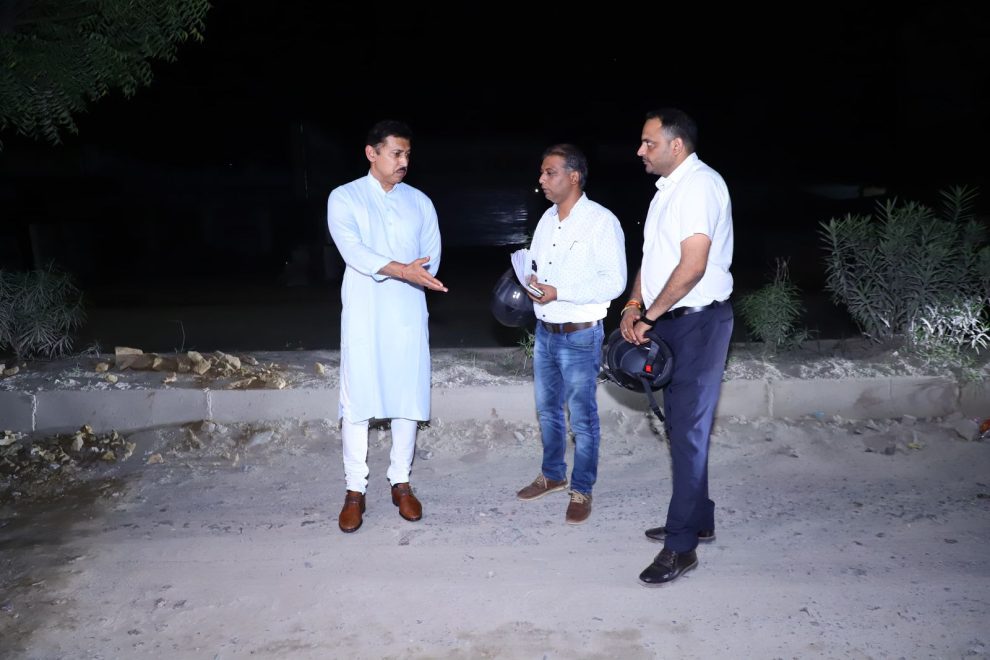

For many years, governance in Rajasthan often felt distant to people living in villages. Decisions were taken in Jaipur, but their impact took years—sometimes decades—to reach rural areas. Today, that gap is narrowing.
Under the leadership of Rajyavardhan Singh Rathore, governance is no longer confined to capital-city offices. Policies, approvals, and development works are steadily reaching the ground level—villages, panchayats, and rural households across Rajasthan.
This blog explores how Rathore’s governance approach is bridging the Jaipur–village divide and why rural communities are beginning to feel included in the state’s development journey.
Breaking the Jaipur–Village Divide
Traditionally, rural development suffered due to slow communication between the state capital and villages. Files moved slowly, coordination between departments was weak, and local issues often remained unresolved.
Rathore’s governance model focuses on:
- Decentralised decision-making
- Faster administrative approvals
- Strong coordination between departments
- Regular monitoring of field-level execution
As a result, decisions taken in Jaipur are now translating into visible work in villages within months, not years.
Administrative Speed That Reaches Villages
One of the most noticeable changes for rural residents is speed. Projects related to roads, water, schools, and healthcare are no longer stuck in paperwork.
Villagers now experience:
- Faster project sanctions
- Clear timelines for completion
- Reduced need for repeated office visits
- Direct accountability of officials
This shift has created confidence that governance is not just active in Jaipur, but responsive at the grassroots level.
Infrastructure Delivery Beyond Urban Areas
Development under Rathore is not limited to cities. Major infrastructure initiatives are being executed across rural belts, especially in areas around Jhotwara, Jobner, Kalwar, and surrounding regions.
Key areas of focus include:
- Rural road construction and widening
- Sewerage and drainage systems
- Drinking water supply infrastructure
- Electrification and street lighting
These works have improved connectivity, safety, and daily convenience for villagers, bringing them closer to markets, schools, and healthcare facilities.
Digital Governance Reaching Rural Citizens
As Minister for Information Technology and Communications, Rathore has expanded digital governance beyond urban users.
Villagers are increasingly accessing:
- Online applications for services
- Digital grievance redressal systems
- Transparent approval tracking
- Faster communication with departments
This reduces dependence on middlemen and ensures fair access to government services, even in remote areas.
Employment and Livelihoods at the Local Level
Governance reaching villages is meaningful only when it creates livelihoods. Rathore’s focus on industry, MSMEs, and skill development has directly benefited rural youth.
Key initiatives include:
- Skill training aligned with local jobs
- Support for rural entrepreneurs
- Faster approvals for small businesses
- Employment generation through infrastructure projects
Many young people now see opportunities within or near their villages instead of migrating to cities.
Education and Healthcare No Longer Urban Privileges
Rural governance reforms have also strengthened access to education and healthcare.
Recent developments include:
- Improved school infrastructure
- Additional classrooms and faculty appointments
- Ambulance services reaching rural blocks
- Satellite hospitals and trauma facilities
These initiatives reduce the urban–rural service gap and ensure that villages receive essential public services with dignity.
Local Feedback, Real-Time Action
Another reason governance feels closer to villages is Rathore’s emphasis on ground-level feedback.
This includes:
- Surprise inspections
- Direct interaction with villagers
- On-the-spot instructions to officials
- Continuous follow-up on complaints
Such engagement reassures rural citizens that their concerns are heard and acted upon.
Why Villages Are Responding with Trust
Trust in governance grows when promises are matched by delivery. Rural communities now report:
- Faster response to local problems
- Transparent handling of development works
- Reduced bureaucratic hurdles
- Visible leadership presence
This trust is reshaping how villagers view the government—not as distant authority, but as an active partner in development.
A Governance Model Rooted in Inclusion
Rathore’s governance approach aligns with national goals of:
- Inclusive growth
- Last-mile delivery
- Digital access for all
- Balanced rural–urban development
By ensuring villages are not left behind, Rajasthan strengthens its foundation for long-term progress.
Conclusion
Governance in Rajasthan is undergoing a quiet but meaningful transformation. Decisions taken in Jaipur are now reaching villages with speed, clarity, and accountability.
Under Col. Rajyavardhan Singh Rathore, governance has moved beyond paperwork to real, on-ground impact. Roads, water supply, employment, and services are steadily reaching rural communities, narrowing the long-standing Jaipur–village divide.
For villagers across Rajasthan, development is no longer something they hear about—it is something they experience.
Stay Connected with Col. Rajyavardhan Singh Rathore
Website: www.rajyavardhanrathore.in
Facebook: facebook.com/Rathore
Instagram: instagram.com/ra_rathore
YouTube: youtube.com/@rajyavardhanrathore_




Add Comment